
About the artwork
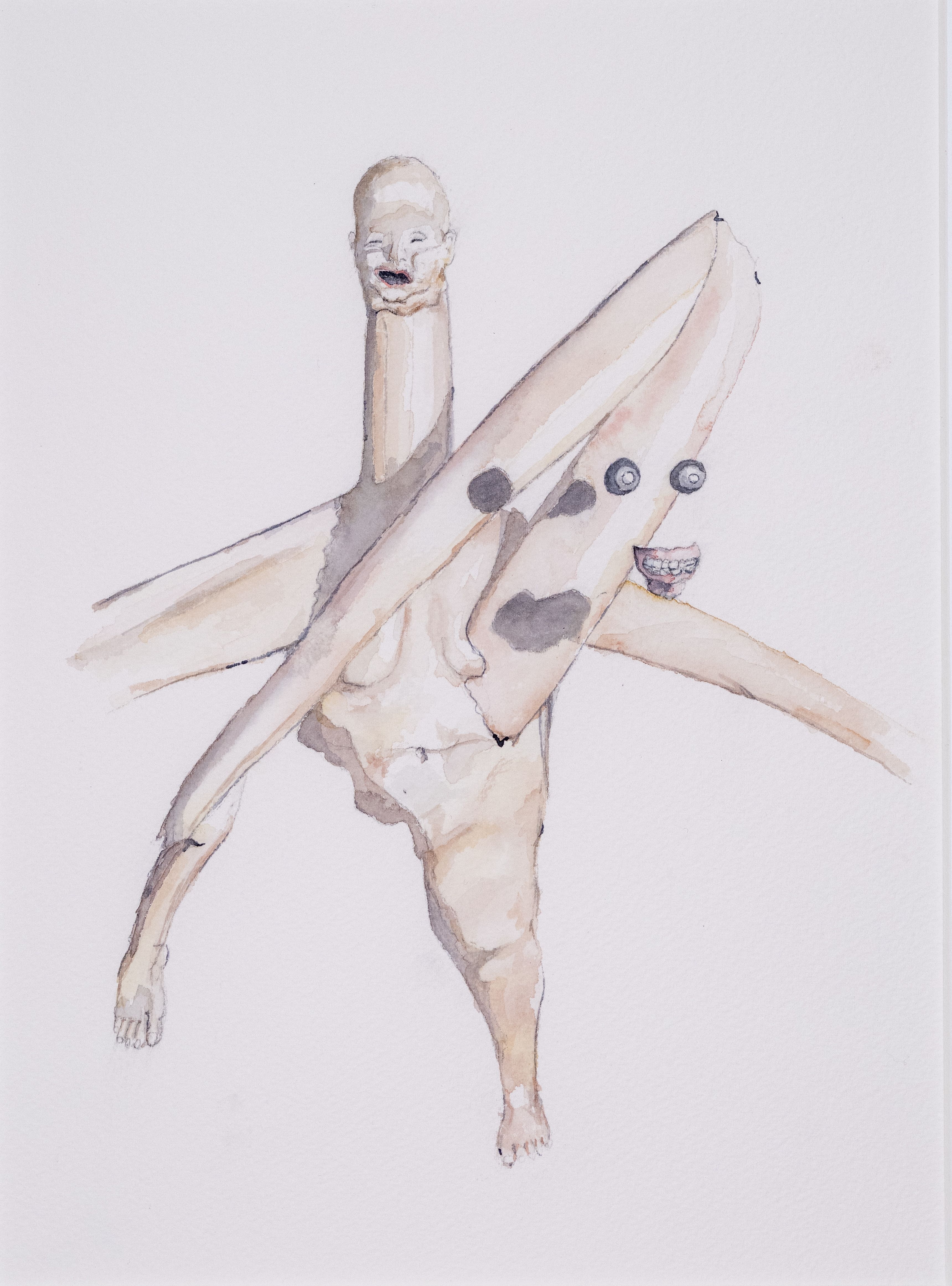
Phantasmal draws its name from a term originating in the early 19th century, evoking the spectral and the surreal. This body of work explores a realm where natural and physical laws are bent and sometimes broken — a universe where gravity itself is absent, leaving forms in a state of eternal equilibrium.
This permanence mirrors the concept of “artifacts” in 3D space—traces of our interventions that emerge as unintended consequences. In the digital realm, these artifacts are evidence of creative action, small reminders of each choice. But the concept extends beyond the digital, reflecting our real-world interactions with nature. From introducing invasive species to failing to contain pathogens, human impact on the environment often leaves irreversible marks, whether intentional or born of oversight.
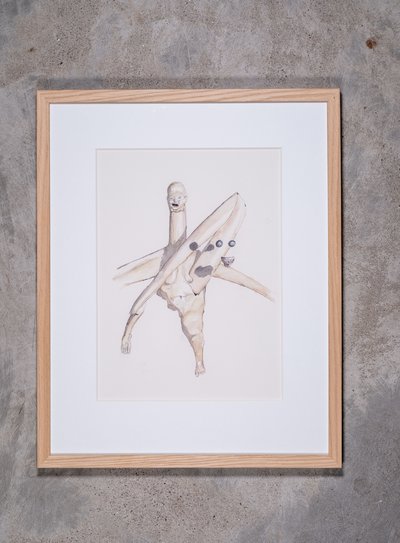
In Phantasmal, I act as both creator and disruptor, crafting digital forms based on natural anatomy and then pushing them to extremes, transforming the recognizable into the alien. Harsh lighting casts bold, cartoonish shadows, and these digital models are then painted with watercolor onto cold-pressed cotton paper. I use the whites of the paper to simulate backlit vibrancy, striving to capture the luminosity of digital RGB in a physical form.
Stylistically, Phantasmal merges Western classical figurative elements with Asian minimalism, creating a hybrid aesthetic. While the visual language nods to manga, it avoids its typical conventions—there are no exaggerated eyes or simplified features. Instead, it presents a blend between the perfect digital and an imperfect, tactile reality, evoking a minimalism that is both familiar and alien. In this world, every trace and artifact serves as a reminder of the lasting impact of human presence.

About the artist
Andreas Reutz, born in 1986 and based in Oslo, is a Norwegian artist in painting, design, and 3D art. His work is conceptually driven, often exploring gender, sexuality, and existentialism through figurative and abstract forms.
Reutz’s art is experimental and closely connected to the digital world. It is inspired by the Japanese philosophy of wabi-sabi, which embraces imperfection and transience.
Reutz describes his creative process as an emotional journey, where creativity flows naturally but can be controlled. He believes that true creativity requires a balance between emotional highs and lows, and this tension drives his work forward. His personal experiences of feeling like a chameleon—fitting in without fully belonging—shape his storytelling style. For Reutz, art is about authenticity, and he draws from his own life to create genuine works.
A key moment in Reutz’s life was when he confronted his fear of the dark while alone in the forest. This experience taught him that fear—and creativity—is largely a product of the mind. This insight has shaped his approach to art, where he embraces the unknown and challenges boundaries.
What makes Andreas Reutz interesting as an artist is his ability to blend personal experiences with broader social issues while maintaining a playful ambiguity. His work challenges conventional thinking about gender and identity using traditional and digital media, making him a relevant voice in contemporary art.